
Why higher-budget buyers are quietly better placed right now
Much of the conversation around housing affordability assumes that higher prices automatically mean tougher buying conditions. In practice, the opposite is increasingly true.
Across Australia’s capital cities, listings data shows that buyer choice is improving most clearly in higher-priced house markets, while competition remains fiercest in the mainstream price bands. For buyers operating above the $1 million mark, that shift is quietly changing the experience of buying.
The reason is simple: buyer density thins out as prices rise. When more homes come onto the market in these higher-value areas, even modest increases in listings can have a meaningful impact on choice, negotiation, and timing.
Sydney illustrates this dynamic most clearly.
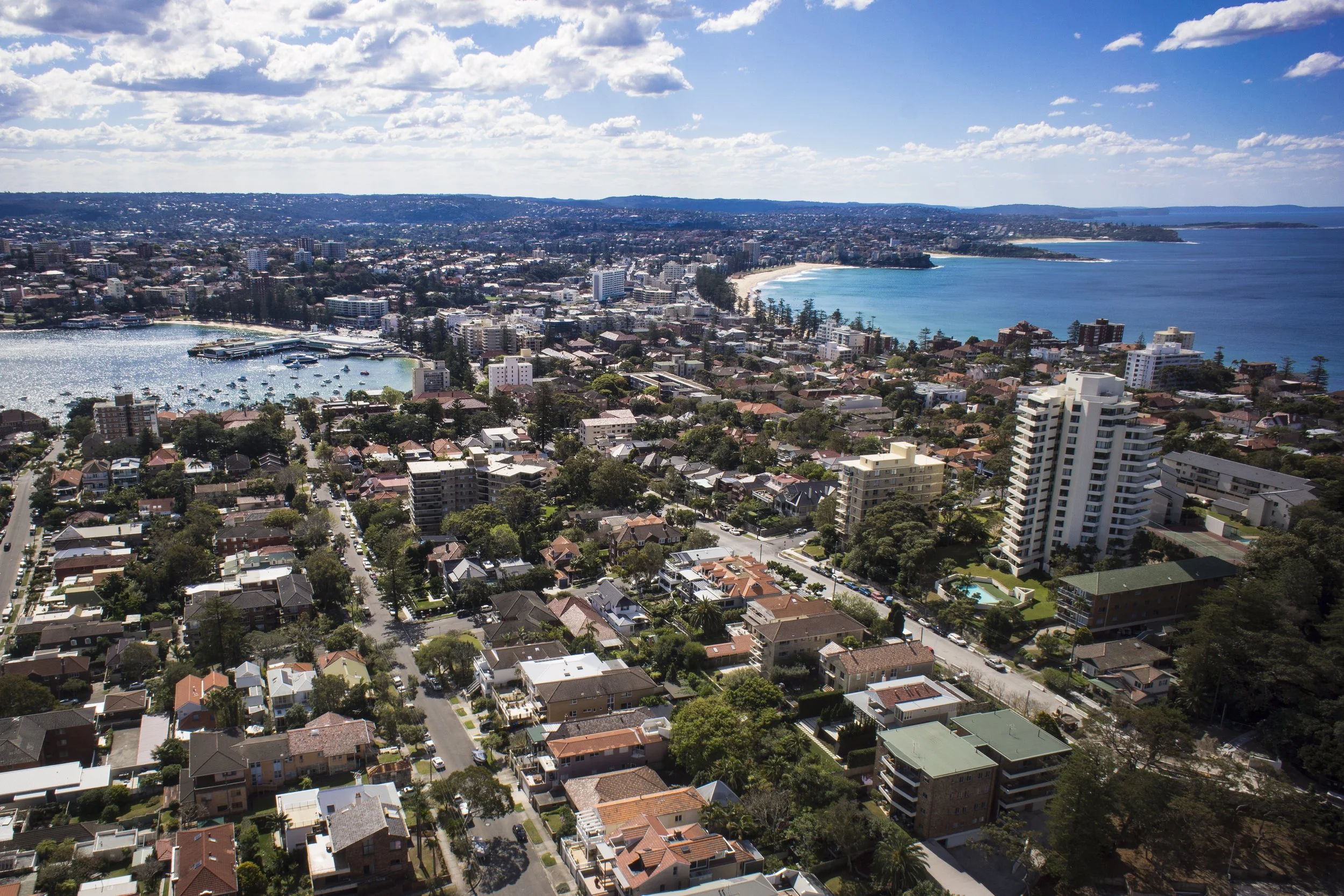
Manly NSW | Airviewonline
On the Northern Beaches, Warringah has a median house price of around $2.65 million, yet house listings are up 59 per cent compared with a year ago. Nearby Pittwater, at roughly $2.50 million, has seen listings rise 34 per cent, while Manly, with houses around $3.60 million, is up 23 per cent. These are not affordable markets by any conventional measure, but they are now offering buyers something that has been scarce for years: selection.
When listings rise by this scale in higher-priced areas, the buying experience changes. Instead of competing for the same small group of tightly held homes, buyers can compare options across multiple suburbs, revisit properties, and negotiate with more confidence. The urgency that often defines prestige markets during supply shortages begins to ease.
A similar pattern is emerging on Sydney’s North Shore. Ku-ring-gai, with houses around $3.50 million, has listings up 55 per cent, while Chatswood–Lane Cove (about $3.53 million) is up 47 per cent. These increases suggest that more discretionary sellers are entering the market — often owners who have seen strong price growth over recent years and are comfortable testing conditions.
Importantly, this improvement in choice is not limited to Sydney’s very top end.
In the city’s Inner West, Leichhardt stands out. With a median house price of around $2.32 million, house listings are up 30 per cent year-on-year. That kind of lift gives buyers noticeably more room to move. Instead of feeling compelled to secure the first suitable property that appears, buyers can afford to be selective, compare across the area, and be firmer on price and terms.
Melbourne is showing its own version of this story. In Whitehorse – West, houses sit around $1.46 million and listings are up 32 per cent. Port Phillip, at approximately $1.70 million, is up 31 per cent, while Whitehorse – East (about $1.34 million) has seen listings rise 27 per cent. These are large, established areas where buyers have long complained about thin supply. A lift of this scale materially changes conditions, even if prices themselves remain elevated.

Albert Park | Airview Online
What’s notable is that these improvements are often absent just one price band lower. In many under-$1 million house markets, listings have fallen or stagnated, concentrating competition among a much larger pool of buyers. That contrast explains why higher-budget buyers can now find themselves with more time, more options, and less pressure, even though they are paying more in absolute terms.
Adelaide reinforces the point. Adelaide City has a median house price of about $1.12 million and listings up 35 per cent, while Stonnington-style tightness simply hasn’t appeared here yet. Buyers in this segment are seeing a broader range of homes and a more balanced negotiation environment. By contrast, in lower-priced parts of the city, listings improvements are smaller and competition remains firmer.
Brisbane, too, has pockets where higher-budget buyers are benefiting from rising supply. In Mt Gravatt, with houses around $1.38 million, listings are up 12 per cent. That may not sound dramatic, but in a family-oriented area with historically tight stock, even a moderate lift can reduce the intensity that comes from scarcity.

Mount Gravatt | Airviewonline
The broader takeaway is that difficulty in buying is no longer linearly related to price. Instead, it’s increasingly driven by how many buyers are competing for each listing. In dense, mainstream price bands, even small drops in supply can make buying feel brutally competitive. In higher-priced segments, rising listings are restoring balance.
For buyers with larger budgets, this creates a quiet advantage. More choice means better decision-making, less emotional pressure, and a lower risk of overpaying simply because there are no alternatives. It doesn’t mean prices will fall — but it does mean the odds are shifting.
In today’s market, price tells you what you can afford. Listings tell you how hard you’ll have to fight to buy. And right now, in many capital-city markets, higher-budget buyers are finding the fight a little easier than those below them.